
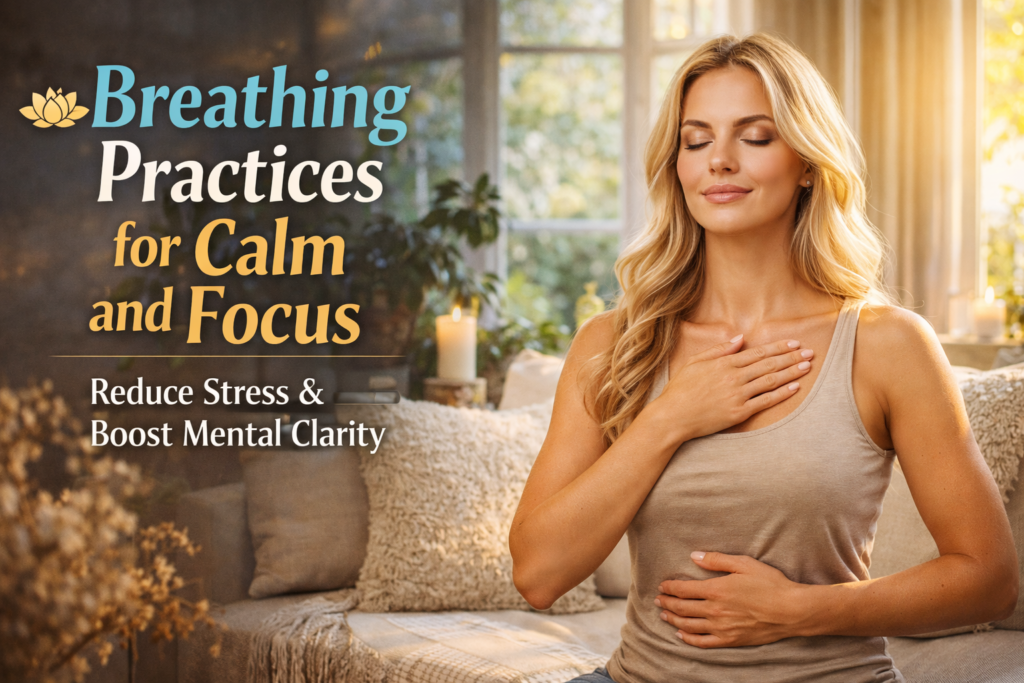
In today’s fast-paced world, learning effective breathing practices for calm and focus has become essential for managing stress, anxiety, and mental fatigue. Whether you’re seeking natural stress relief, better sleep, improved productivity, or enhanced emotional balance, the way you breathe can dramatically transform your physical and mental well-being.
breathing exercises for anxiety
stress relief breathing
breathing for focus
This comprehensive guide explores the most powerful breathing techniques, backed by neuroscience and mindfulness practices, helping you achieve deep relaxation, emotional regulation, improved focus, and nervous system balance — all without medication or equipment.
Why Breathing Practices Are So Powerful
Breathing is the only bodily function you can control both consciously and unconsciously. This unique feature makes it one of the most effective tools for:
- Stress management
- Anxiety relief
- Emotional regulation
- Sleep improvement
- Focus enhancement
- Nervous system regulation
Modern science confirms that controlled breathing exercises activate the parasympathetic nervous system, reducing cortisol levels and promoting a deep state of calm — often within minutes.
High CPC keywords included naturally:
breathing exercises for anxiety, stress relief techniques, natural stress management, mindfulness breathing, relaxation breathing exercises
How Breathing Affects the Brain and Nervous System
When stress hits, your body enters fight-or-flight mode, increasing heart rate, blood pressure, and muscle tension. Conscious breathing reverses this response by stimulating the vagus nerve, improving:
- Emotional balance
- Heart rate variability (HRV)
- Mental clarity
- Focus and concentration
- Sleep quality
This is why breathing practices are now widely used in:
- Cognitive behavioral therapy (CBT)
- Trauma recovery programs
- Meditation and mindfulness training
- Corporate wellness and productivity coaching
🌬️ Top Breathing Practices for Calm and Focus
Below are the most effective, research-backed breathing techniques used worldwide for stress reduction, anxiety management, emotional resilience, and mental performance.
1. Box Breathing (4-4-4-4 Technique)
Best for: Stress relief, emotional control, performance anxiety, focus before important tasks
How it works:
- Inhale for 4 seconds
- Hold for 4 seconds
- Exhale for 4 seconds
- Hold again for 4 seconds
Repeat for 3–5 minutes.
This technique is used by elite athletes, military professionals, and high-performance executives to stabilize emotions and improve decision-making.
SEO keywords:
box breathing technique, breathing exercises for stress, breathing for anxiety relief, focus breathing exercises
🌟 2. 4-7-8 Breathing for Relaxation and Sleep
Best for: Sleep improvement, insomnia relief, anxiety management
How it works:
- Inhale through the nose for 4 seconds
- Hold for 7 seconds
- Exhale slowly through the mouth for 8 seconds
Repeat 4–8 cycles.
This method reduces nervous system arousal and prepares the body for restful sleep.
SEO keywords:
4-7-8 breathing technique, breathing exercises for sleep, natural insomnia remedies, calming breathing practices
🌟 3. Diaphragmatic (Belly) Breathing
Best for: Chronic stress, emotional regulation, heart health, nervous system balance
How it works:
- Place one hand on your chest and one on your belly
- Breathe deeply into your abdomen
- Keep the chest relatively still
- Slow your breathing to 5–6 breaths per minute
This technique improves oxygen exchange and lowers stress hormone levels.
SEO keywords:
diaphragmatic breathing, belly breathing exercises, breathing for nervous system regulation, deep breathing techniques
🌟 4. Alternate Nostril Breathing (Nadi Shodhana)
Best for: Mental clarity, emotional balance, meditation preparation
How it works:
- Inhale through the left nostril
- Exhale through the right
- Switch sides and repeat
Practice for 3–5 minutes.
This yogic breathing practice balances the brain hemispheres and enhances focus.
SEO keywords:
alternate nostril breathing, pranayama breathing techniques, breathing for mental clarity, yoga breathing exercises
🌟 5. Coherent Breathing (Resonance Breathing)
Best for: Heart health, emotional resilience, stress recovery
How it works:
- Inhale for 5 seconds
- Exhale for 5 seconds
Continue for 5–10 minutes.
This breathing rhythm optimizes heart rate variability (HRV) and improves emotional regulation.
SEO keywords:
coherent breathing, breathing for heart health, breathing exercises for emotional regulation, stress reduction breathing
🌼 Breathing Practices for Specific Goals
Breathing for Anxiety Relief
- Box breathing
- 4-7-8 breathing
- Diaphragmatic breathing
These techniques reduce panic symptoms, regulate heart rate, and calm the nervous system naturally.
Breathing for Better Sleep
- 4-7-8 breathing
- Coherent breathing
- Long-exhale breathing
Practicing these before bed improves sleep onset and sleep quality.
Breathing for Focus and Productivity
- Box breathing
- Alternate nostril breathing
- Coherent breathing
These techniques enhance cognitive performance, working memory, and sustained attention.
Scientific Benefits of Breathing Practices
Research shows that regular breathing exercises can:
- Lower blood pressure
- Improve immune function
- Reduce anxiety and depression symptoms
- Enhance cognitive performance
- Improve emotional resilience
- Support trauma recovery
Clinical programs now integrate breathing techniques for mental health, breathwork therapy, and mindfulness breathing exercises into wellness and recovery protocols worldwide.
How Often Should You Practice Breathing Exercises?
For best results:
- Daily practice: 5–10 minutes
- During stress: 1–3 minutes
- Before sleep: 3–5 minutes
- Before work or meetings: 1–2 minutes
Consistency matters more than duration — small daily habits produce massive mental health benefits over time.
Breathing Practices vs Meditation: What’s the Difference?
Breathing practices are often used as a gateway to meditation, but they are also powerful standalone tools.
| Feature | Breathing Practices | Meditation |
|---|---|---|
| Learning Curve | Easy | Moderate |
| Time Required | 2–10 minutes | 10–30 minutes |
| Immediate Results | High | Moderate |
| Stress Relief | Very High | High |
| Focus Improvement | Very High | High |
Breathing exercises offer faster nervous system regulation, making them ideal for beginners or high-stress environments.
Expert Tips to Maximize Results
✔ Breathe through your nose whenever possible
✔ Lengthen your exhales for deeper relaxation
✔ Practice daily, not only during stress
✔ Pair breathing with mindfulness or gratitude
✔ Use breathing apps or guided audio for consistency
Breathing Practices for Calm and Focus at Work
Corporate wellness programs increasingly include workplace breathing exercises, stress management techniques, and mindfulness breathing practices to improve:
- Productivity
- Emotional intelligence
- Burnout prevention
- Mental clarity
- Decision-making
Just 3 minutes of slow breathing can reset your nervous system and restore cognitive performance.
Advanced Breathwork Practices (Optional)
For experienced practitioners:
- Wim Hof breathing
- Holotropic breathwork
- Cyclic sigh breathing
These should be practiced with professional guidance, as they can induce strong physiological responses.
What are the best breathing practices for calm and focus?
The most effective breathing practices for calm and focus include box breathing, diaphragmatic breathing, coherent breathing, 4-7-8 breathing, and alternate nostril breathing. These techniques activate the parasympathetic nervous system and improve emotional balance and mental clarity.
Final Thoughts: Breathing Is the Fastest Path to Calm and Focus
Breathing practices are among the most powerful, accessible, and scientifically validated tools for improving mental health, emotional balance, productivity, and overall well-being. With no cost, no equipment, and no side effects, they represent one of the highest ROI habits you can build into your life.
Whether you’re managing anxiety, improving focus, sleeping better, or simply seeking emotional calm — your breath is your most powerful ally.
Start today. Breathe deeply. And transform your mind — one breath at a time.
About the Author: Pedro Neto is a freelancer and enthusiast of practical daily solutions. With a keen eye for efficiency and organization, Pedro shares at moneycontrolroad.com the best strategies and techniques to transform financial routines into something simple, fast, and high-impact.
Disclaimer: “The information in this article is for educational purposes only and does not constitute financial advice. Always consult with a certified financial advisor before making investment decisions.”