
How to Build an Emergency Fund Fast (Step-by-Step Guide for 2026)

Author: Pedro Neto

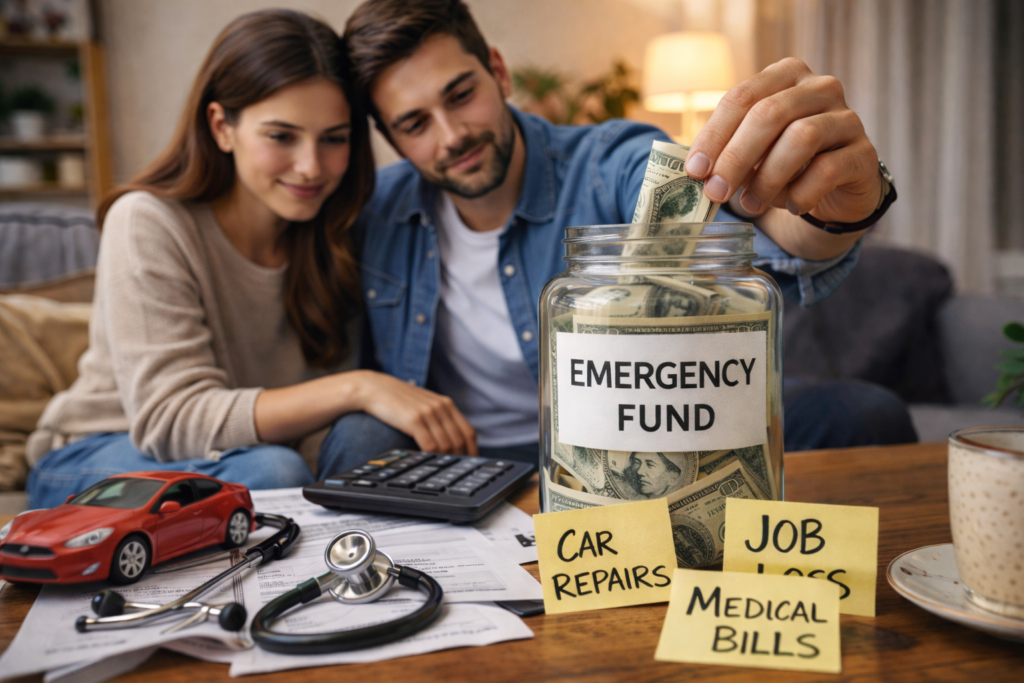
Young couple saving money at home by putting cash into an emergency fund jar while planning their budget with calculator and financial documents in a realistic living room environment.

Introduction

Financial emergencies happen when we least expect them. A medical bill, car repair, job loss, or unexpected home expense can quickly destroy months of financial stability.

In the United States and Canada, many households live paycheck to paycheck. According to multiple financial studies, a large percentage of adults do not have enough savings to cover a $1,000 emergency.

This is exactly why building an emergency fund is one of the most important steps in personal finance.

An emergency fund is a dedicated savings account used only for unexpected expenses. It acts as a financial safety net that protects you from going into debt when life surprises you.

If you are new to personal finance, you should first understand the basics of managing money.

Once you understand those fundamentals, the next critical step is building financial protection.

In this guide, you will learn:

  • What an emergency fund is
  • Why it is essential
  • How much money you should save
  • The fastest ways to build one
  • Practical strategies that actually work

What Is an Emergency Fund?

An emergency fund is money set aside specifically for unexpected financial situations.

These situations may include:

  • Medical emergencies
  • Car repairs
  • Job loss
  • Urgent home repairs
  • Unexpected travel expenses
  • Insurance deductibles

The purpose of an emergency fund is simple: protect your financial stability.

Without an emergency fund, most people rely on:

  • Credit cards
  • Personal loans
  • Payday loans
  • Borrowing from family

These solutions often create long-term financial problems because they involve high interest rates.

Instead of borrowing money, an emergency fund allows you to pay for emergencies using your own savings.


Why an Emergency Fund Is Essential

Building an emergency fund is one of the most powerful financial habits you can develop.

Here are the main reasons why it is so important.

1. It Protects You From Debt

Unexpected expenses are the main reason people accumulate credit card debt.

If your car suddenly needs a $1,200 repair and you don’t have savings, you will likely use a credit card.

With interest, that $1,200 could easily turn into $1,500 or more.

An emergency fund prevents this cycle.


2. It Reduces Financial Stress

Money stress is one of the biggest causes of anxiety.

When you have emergency savings, you gain peace of mind knowing you can handle unexpected expenses.

Financial security improves not only your finances but also your mental well-being.


3. It Protects Your Long-Term Financial Goals

Without an emergency fund, people often withdraw money from:

  • retirement accounts
  • investment portfolios
  • long-term savings

This can destroy years of financial progress.

Emergency savings protect your long-term wealth.


How Much Should You Save in an Emergency Fund?

Financial experts typically recommend saving three to six months of living expenses.

However, beginners should start with smaller milestones.

Step 1: First Goal — $1,000

Your first target should be saving $1,000.

This amount covers many small emergencies such as:

  • car repairs
  • medical visits
  • urgent bills

Step 2: Three Months of Expenses

Once you reach $1,000, start building a larger fund equal to three months of essential expenses.

This includes:

  • rent or mortgage
  • food
  • utilities
  • insurance
  • transportation

Step 3: Six Months of Expenses

The ultimate goal is six months of expenses.

This level of savings provides strong protection in case of job loss or major emergencies.

To understand how to organize these expenses properly, you can also use a proven budgeting system.

This budgeting method helps you control spending and save faster.


Where Should You Keep Your Emergency Fund?

Your emergency fund should be stored in a safe and accessible account.

The best options include:

High-Yield Savings Accounts

These accounts offer higher interest rates than traditional savings accounts.

Benefits include:

  • easy access
  • low risk
  • interest earnings

Online Savings Banks

Many online banks offer competitive interest rates and low fees.

This allows your emergency fund to grow while remaining safe.


Money Market Accounts

Money market accounts can also be a good option because they combine savings with limited check-writing ability.


Step-by-Step Plan to Build an Emergency Fund Fast

Building an emergency fund may seem difficult, but it becomes manageable when broken into small steps.


Step 1: Calculate Your Monthly Expenses

Start by listing your essential monthly expenses.

Examples include:

  • housing
  • groceries
  • utilities
  • transportation
  • insurance

Knowing your numbers helps you determine how much you should save.


Step 2: Create a Budget

A budget helps you control spending and identify opportunities to save money.

If you have not created a structured budget yet, this method is one of the easiest systems available.

Read:

This rule divides your income into three simple categories:

  • needs
  • wants
  • savings

Using this method makes saving much easier.


Step 3: Automate Your Savings

Automation is one of the most effective financial strategies.

Set up automatic transfers from your checking account to your savings account.

Even small transfers like:

  • $25 per week
  • $50 per paycheck

can grow significantly over time.


Step 4: Cut Unnecessary Expenses

Reducing unnecessary spending can dramatically accelerate your savings.

Common areas to review include:

  • unused subscriptions
  • dining out
  • impulse purchases
  • premium services you rarely use

Small changes can free up hundreds of dollars per month.


Step 5: Increase Your Income

Another powerful strategy is increasing your income.

Consider options such as:

  • freelancing
  • side hustles
  • selling unused items
  • overtime work

Extra income can be directed entirely toward your emergency fund.


Smart Strategies to Build Your Emergency Fund Faster

Many people believe saving money takes years.

However, the right strategies can speed up the process significantly.

Use Windfalls

Whenever you receive extra money, consider saving part of it.

Examples include:

  • tax refunds
  • work bonuses
  • gifts
  • refunds

Even saving half of these amounts can boost your progress.


Save Unexpected Income

Unexpected money can become a powerful savings accelerator.

For example:

  • cashback rewards
  • rebates
  • freelance payments

Instead of spending these funds, deposit them directly into your emergency savings.


Challenge Yourself With Savings Goals

Savings challenges can make the process more motivating.

Examples include:

  • 30-day savings challenges
  • weekly savings plans
  • no-spend months

These techniques help build consistent saving habits.


Common Emergency Fund Mistakes

Many people make mistakes that slow down their progress.

Here are the most common ones.

Using the Fund for Non-Emergencies

An emergency fund should only be used for true emergencies.

Vacations, shopping, or gadgets do not qualify.


Keeping the Fund Too Accessible

If your emergency fund is in your everyday checking account, you may feel tempted to spend it.

Keeping it in a separate savings account helps protect it.


Not Replenishing the Fund

If you use part of your emergency savings, make it a priority to rebuild it as soon as possible.


How an Emergency Fund Improves Your Financial Future

An emergency fund does more than just cover unexpected expenses.

It also creates a strong foundation for financial success.

Once you build this safety net, you can focus on:

  • investing
  • retirement planning
  • building wealth
  • long-term financial goals

Emergency savings provide stability that allows you to make smarter financial decisions.


Final Thoughts

Building an emergency fund is one of the most important steps in personal finance.

It protects you from debt, reduces financial stress, and creates long-term financial security.

The key is to start small and remain consistent.

Even small savings contributions can grow into a powerful financial safety net over time.

With discipline and a clear plan, anyone can build an emergency fund and gain greater control over their financial future.

Author Description

Pedro Neto is a financial content writer and digital entrepreneur specializing in personal finance, money management, and financial education. Through his blog Money Control Road, he shares practical strategies that help readers build savings, eliminate debt, and achieve long-term financial stability. His mission is to simplify financial concepts and empower people to take full control of their financial future.

Financial Disclaimer

The information provided in this article is for educational and informational purposes only and should not be considered financial, investment, or legal advice. While we strive to provide accurate and up-to-date information, financial situations vary from person to person, and the strategies discussed may not be suitable for everyone.

Before making any financial decisions, you should consider your individual financial circumstances and consult with a qualified financial advisor or professional. The author and this website are not responsible for any financial decisions or actions taken based on the information provided in this content.


The 50/30/20 Budget Rule: How Americans Can Take Control of Their Money

Author: Pedro Neto

Beautiful woman managing her finances at home using the 50/30/20 budget rule with laptop, calculator, savings jar, and budget chart showing needs, wants, and savings.

Introduction: Why Budgeting Matters More Than Ever

Managing money has become one of the biggest challenges for many households in the United States and Canada. Rising living costs, inflation, credit card debt, and financial uncertainty make it increasingly difficult for people to stay financially stable.

Many individuals earn good incomes yet still struggle to save money. The reason is simple: without a clear system for managing expenses, income tends to disappear quickly.

This is where the 50/30/20 budget rule becomes incredibly powerful.

The 50/30/20 budgeting method is one of the simplest and most effective ways to organize personal finances. It allows individuals and families to divide their income into three clear categories:

  • Needs
  • Wants
  • Savings and debt repayment

Instead of complex spreadsheets or strict financial systems, this budgeting rule offers a balanced approach that is easy to understand and easy to maintain.

In this guide, you will learn:

  • What the 50/30/20 rule is
  • How to apply it to your monthly income
  • How Americans and Canadians use it to control spending
  • Tools and apps that help manage budgets
  • Common mistakes to avoid
  • How this method can help you build wealth over time

If you want to take control of your money, eliminate financial stress, and start saving more effectively, this budgeting strategy can completely transform your financial life.


What Is the 50/30/20 Budget Rule?

The 50/30/20 budget rule is a personal finance strategy that divides your after-tax income into three spending categories.

The idea was popularized by U.S. Senator and financial expert Elizabeth Warren and has become one of the most widely recommended budgeting systems.

The formula works like this:

50% of income — Needs
30% of income — Wants
20% of income — Savings and debt repayment

This structure ensures that your essential expenses are covered, your lifestyle remains enjoyable, and your financial future is protected.

Unlike strict budgeting plans that restrict spending heavily, this system allows for balance.

Let’s explore each category in detail.


The First 50%: Essential Needs

Half of your income should go toward essential living expenses.

These are costs that are necessary for survival and basic living.

Examples include:

  • Rent or mortgage payments
  • Utility bills
  • Groceries
  • Health insurance
  • Transportation
  • Minimum debt payments
  • Childcare expenses

For many households, housing alone can consume a large portion of income. Ideally, housing costs should remain under 30% of income, but in high-cost cities this can be difficult.

If your needs exceed 50% of your income, you may need to adjust spending in other areas or look for ways to increase income.

Common essential expenses include:

Housing costs
Electricity and water
Internet and phone bills
Transportation and fuel
Insurance payments
Groceries and household supplies

Tracking these costs carefully is the first step to gaining financial clarity.


The 30% Category: Wants and Lifestyle Spending

The second portion of your budget is dedicated to wants.

Wants are non-essential expenses that improve your quality of life but are not necessary for survival.

These expenses may include:

Dining out
Streaming subscriptions
Travel and vacations
Gym memberships
Shopping and entertainment
Coffee shops and restaurants

Many people underestimate how much money they spend in this category.

Small purchases such as daily coffee, food delivery, and online subscriptions can add up quickly over time.

However, the goal of the 50/30/20 rule is not to eliminate enjoyment from your life.

Instead, it encourages responsible lifestyle spending that does not damage long-term financial goals.

Maintaining this balance is what makes the system sustainable.


The Final 20%: Savings and Financial Growth

The most powerful part of the 50/30/20 rule is the final category.

Twenty percent of your income should be directed toward saving money and building financial security.

This includes:

Emergency fund savings
Retirement contributions
Investment accounts
Debt repayment beyond minimum payments
Education savings funds

Many financial experts consider this category the most important.

Without consistent savings, unexpected events like medical bills, job loss, or emergencies can create serious financial problems.

By committing 20% of income to financial growth, you begin building long-term stability.

Over time, these savings can transform your financial future.


How to Calculate Your 50/30/20 Budget

Applying the rule is simple.

Step 1: Calculate your monthly after-tax income.

For example:

Monthly income after taxes: $4,000

Step 2: Divide it according to the rule.

50% Needs = $2,000
30% Wants = $1,200
20% Savings = $800

This breakdown becomes your monthly spending guideline.

You can adjust slightly depending on personal circumstances, but staying close to these percentages keeps finances balanced.


Why the 50/30/20 Budget Rule Works

The reason this budgeting method works so well is because it simplifies money management.

Traditional budgets often fail because they are too complicated.

People create long spreadsheets with dozens of categories and strict limits, which become difficult to maintain.

The 50/30/20 system focuses on only three categories, making it easier to follow consistently.

Key benefits include:

Financial clarity
Reduced overspending
Improved savings habits
Lower financial stress
Better long-term planning

Because it is simple, people are more likely to stick with it.

Consistency is the real secret to financial success.


How Americans Are Using the 50/30/20 Rule

In the United States and Canada, this budgeting strategy has gained massive popularity among young professionals and families.

With rising housing costs and increasing consumer debt, many individuals are looking for simple financial systems.

The 50/30/20 rule offers exactly that.

It works particularly well for:

Young professionals starting their careers
Families managing household expenses
Individuals paying off debt
People trying to build savings

Many personal finance blogs and financial advisors recommend this method as a starting point for budgeting.


The Role of Emergency Funds

One of the first priorities within the 20% savings category should be building an emergency fund.

An emergency fund protects you from unexpected expenses such as:

Medical emergencies
Car repairs
Job loss
Home repairs

Financial experts recommend saving three to six months of living expenses.

For example:

If monthly expenses are $3,000, your emergency fund should be between $9,000 and $18,000.

Having this safety net prevents people from relying on credit cards or loans during emergencies.


Budgeting Tools and Apps That Help

Technology has made budgeting easier than ever.

Several financial apps help track expenses and apply the 50/30/20 rule automatically.

Popular budgeting apps include:

Mint
YNAB (You Need A Budget)
PocketGuard
Goodbudget
Personal Capital

These tools connect to bank accounts and categorize spending automatically.

Using an app makes it easier to see where money is going each month.


Common Budgeting Mistakes to Avoid

Even with a simple system like the 50/30/20 rule, people often make mistakes.

The most common ones include:

Not tracking expenses
Underestimating lifestyle spending
Ignoring small purchases
Failing to adjust the budget over time

Financial habits change as income and expenses evolve.

Reviewing your budget every few months helps maintain balance.


How to Increase Your Savings Faster

If you want to accelerate financial progress, there are several ways to increase savings beyond 20%.

Strategies include:

Reducing unnecessary subscriptions
Cooking at home more often
Negotiating bills and insurance
Increasing income through side jobs
Automating savings transfers

Automation is particularly powerful.

When savings are transferred automatically each month, you remove the temptation to spend the money.


Long-Term Wealth Building

Budgeting is not only about controlling expenses.

It is about creating a foundation for wealth building.

When savings are invested wisely, they can grow significantly over time.

Investment options may include:

Stock market index funds
Retirement accounts
Real estate investments
Dividend stocks

The earlier people start investing, the more they benefit from compound growth.

A disciplined budget makes consistent investing possible.


Final Thoughts

The 50/30/20 budget rule is one of the most practical and effective ways to manage money.

It simplifies personal finance by dividing income into three clear categories that balance living expenses, lifestyle enjoyment, and future financial security.

For Americans and Canadians facing rising living costs and financial pressure, this budgeting strategy provides a clear path toward financial stability.

By applying this system consistently, individuals can reduce financial stress, build savings, eliminate debt, and create long-term wealth.

The key is not perfection.

The key is consistency.

Start with small steps, track your expenses, follow the percentages, and gradually improve your financial habits.

Over time, these small changes can lead to life-changing financial results.